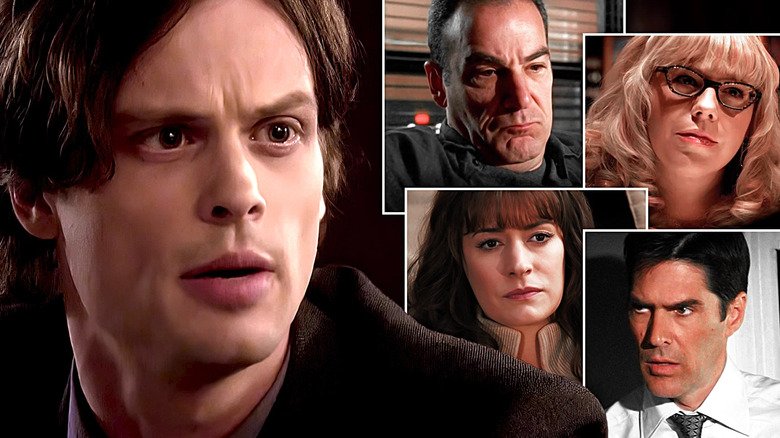
If you've ever found yourself glued to a "Criminal Minds" marathon, captivated by the intricate dance between profiler and unsub, you've undoubtedly encountered the indelible mark left by Jason Gideon. His presence defined the show's early years, laying the groundwork for the Behavioral Analysis Unit (BAU) as we know it. For viewers keen on understanding the genesis of the show's psychological depth and the character who embodied its very soul, diving into the Key Jason Gideon Criminal Minds Episodes isn't just a recommendation—it's essential viewing. These pivotal moments chart his impactful journey, revealing the brilliance, the burden, and ultimately, the breakdown of a man who saw too much.
At a Glance: Understanding Jason Gideon's Crucial Role
- The Architect of Profiling: Gideon was instrumental in establishing the BAU's methodology and reputation.
- Mentor to Dr. Reid: His unique bond with Reid showcased his teaching and nurturing side.
- A Burdened Genius: While unparalleled in his skills, the trauma of his work eventually led to his emotional unraveling.
- Defining Cases: Episodes often highlighted his psychological tactics, unconventional insights, and the deep personal cost of fighting evil.
- Abrupt Departure: His sudden retirement at the beginning of Season Three remains one of the show's most impactful character exits.
- Lasting Legacy: Even after his departure and eventual death, Gideon's influence resonated through the team, particularly with David Rossi.
The Architect of Minds: Understanding Jason Gideon's Legacy
Before there was Hotch's stoic leadership or Rossi's seasoned wisdom, there was Jason Gideon. Born in 1955, Gideon wasn't just a profiler; he was the profiler, a former Senior Supervisory Special Agent whose insights were so profound they bordered on prophetic. He was the protégé of Max Ryan, learning the art of profiling and even participating in some memorable, if cheeky, early career exploits, like rushing up 25 flights of stairs during a prank on a bomber case. Gideon’s mind was a finely tuned instrument, capable of delving into the darkest corners of human psychology to extract patterns and predict behavior. He wasn't just solving crimes; he was understanding the very essence of criminality.
His personal life, however, suffered the heavy toll of his commitment. His marriage to biological psychiatrist Dr. Jill, a silent partner in the BAU's establishment, ended in divorce in 1999, though she remained his therapist. A previous nervous breakdown investigating "The Boston Shrapnel Bomber," Adrian Bale, after a catastrophic warehouse explosion he ordered killed six agents and a hostage, forced him into a six-month medical leave for PTSD. He returned, but the cracks were already forming in the brilliant façade. To truly grasp the character's depth and impact, we need to trace his footsteps through the episodes that defined him, showcasing his genius and foreshadowing his eventual, heartbreaking exit. If you're looking to Learn more about Jason Gideon, these episodes are your starting point.
Season One: The Foundation of Fear and Gideon's Unmatched Brilliance
Season One introduces us to Gideon as the undisputed elder statesman of the BAU. His methods are unconventional, his mind sharp, and his presence commanding. These episodes aren't just about solving crimes; they're about establishing Gideon as the team's intellectual anchor and showing us how he thinks.
"Extreme Aggressor" (Season 1, Episode 1)
Why it matters: This is our introduction to Gideon, and it immediately showcases his unique profiling style. Faced with "The Seattle Strangler," Timothy Vogel, Gideon doesn't just identify the killer; he provokes him. His keen observation that Vogel enjoyed watching fear allows him to psychologically corner the unsub, saving Heather Woodland's life by understanding the killer's core motivations. It's a masterclass in psychological manipulation for the greater good, setting the tone for his approach.
"The Footpath Killer" (Season 1, Episode 4)
Why it matters: This episode highlights Gideon's uncanny ability to remember details and make connections others miss. He realizes he'd previously encountered the killer at a gas station. His subsequent psychological tactics at that same gas station, where he subtly provokes and then subdues the killer, are a testament to his strategic mind. It also reveals the quiet burden he carries, seeing evil even in fleeting moments.
"Won't Get Fooled Again" (Season 1, Episode 6)
Why it matters: Adrian Bale, "The Boston Shrapnel Bomber," is Gideon's personal demon. This episode sees Bale’s return through a copycat, forcing Gideon to confront his past trauma head-on. Gideon makes a deal with Bale to disarm a bomb, but his true genius shines when he calls Bale's bluff, returning him to prison. It’s a chilling reminder of the lasting scars Gideon carries and his resilience in the face of his worst nightmares.
"Plain Sight" (Season 1, Episode 7)
Why it matters: This case exemplifies Gideon's ability to dive into an unsub's twisted psyche. He identifies "The Tommy Killer" as a phone technician who feels invisible and glues his victims' eyes open as a macabre cry for recognition. Gideon's empathy, combined with his strategic mind, allows him to convince the killer to surrender by promising him the very fame he craved, demonstrating his skill in exploiting an unsub's core need.
"The Fox" (Season 1, Episode 13)
Why it matters: In a brilliant display of psychological interrogation, Gideon secures a confession from Karl Arnold, "The Fox," responsible for five family murders. Gideon intentionally mixes up victim photos, knowing Karl's obsessive need for order would expose his intimate knowledge of the crime scenes. It's a subtle yet powerful tactic that reveals Gideon's deep understanding of an unsub's personality quirks.
"Riding the Lightning" (Season 1, Episode 14)
Why it matters: This episode delves into the moral complexities of Gideon's work. He believes Sarah Jean Mason is innocent of killing her son, despite her confession. As the execution approaches, he discovers her son, Riley Dawes, is alive and adopted, and Sarah confessed to protect him from his abusive father. Gideon makes the heart-wrenching decision to allow Sarah to be executed, respecting her wish for Riley to have a new life unburdened by his past. It's a profound moment showcasing his ethical struggles and capacity for difficult empathy.
"The Fisher King, Part 1" (Season 1, Episode 22)
Why it matters: This finale sets up the intense cliffhanger for Season 2 and highlights Gideon's vulnerabilities. Receiving a man's head in a box, Gideon chastises Garcia for a security breach but then, in a moment of brilliance, finds a suspect, unknowingly breaking the unsub's rule of "no outsiders." This action will have severe repercussions, foreshadowing the immense personal cost of his job.
Season Two: Unraveling the Proficient Mind and the Road to Breaking
Season Two sees Gideon continue to excel, but the cases become increasingly personal and the emotional toll becomes more visible. The season builds toward the confrontation with Frank Breitkopf, an event that will shatter Gideon's world.
"The Fisher King, Part 2" (Season 2, Episode 1)
Why it matters: The immediate fallout from Gideon's actions in Part 1 is devastating. The unsub shoots Elle, a direct consequence of Gideon "breaking the rules." This episode reinforces the high stakes of their work and the personal guilt Gideon carries when his decisions have unforeseen, tragic consequences for his team.
"The Perfect Storm" (Season 2, Episode 3)
Why it matters: This episode showcases Gideon's observational prowess in interrogation. He identifies Amber Canardo, not her husband Tony, as the dominant killer in a couple, noting her calm demeanor and direct eye contact. By understanding this dynamic, he convinces Tony to reveal the real victim's location, leading to Amber's arrest and another rescue. It's a testament to his ability to read hidden power dynamics.
"The Last Word" (Season 2, Episode 9)
Why it matters: Gideon demonstrates his mastery of indirect communication to trap serial killers. He identifies a unique communication between "The Mill Creek Killer" and "The Hollow Man" through classified ads. Gideon uses a fabricated note to trap the Mill Creek Killer, and then employs a press conference to provoke the attention-seeking Hollow Man into exposing himself. It's a clever, multi-layered trap, proving his ability to outmaneuver even the most cunning unsubs.
"Lessons Learned" (Season 2, Episode 10)
Why it matters: This episode places Gideon in a high-stakes interrogation at Guantanamo Bay with Al-Qaeda member Jamal Abaza. Utilizing Reid's ability to pick up on nonverbal cues and Prentiss's insight into subtext, Gideon masterfully provokes Jamal into revealing a planned anthrax attack. It shows Gideon's adaptability to extreme situations and his effective use of his team's unique strengths under pressure.
"No Way Out" / "No Way Out II: The Evilution of Frank" (Season 2, Episodes 13 & 14)
Why it matters: These two episodes are arguably the most critical in understanding Gideon's eventual breakdown. Frank Breitkopf is described as the "scariest and most evil serial killer" of Gideon's career. Frank’s chilling reign of terror culminates in the murder of Sarah Jacobs, Gideon's friend, and Rebecca Bryant, a former victim rescued by the BAU. Gideon discovers Frank’s motive is tied to his hidden mother. At Union Station, Gideon provokes Frank by insulting his mother, leading Frank to convince Jane Hanratty, a survivor he was obsessed with, to commit suicide with him. This confrontation leaves an irreparable mark on Gideon, directly leading to his emotional issues that spiral in Season Three. The case is a stark reminder of the immense personal toll of this work.
Season Three: The Final Cracks and Departure
The trauma from Frank Breitkopf, combined with the mishandling of a deeply unsettling case, becomes too much for Gideon.
"Doubt" (Season 3, Episode 1)
Why it matters: This is Gideon's final episode as a full-time BAU agent, and it perfectly encapsulates his breaking point. Investigating murders on a college campus, Gideon initially believes security guard Nathan Tubbs is the killer, only for a subsequent murder to occur, seemingly by a copycat. He releases Nathan but keeps watch. Tragically, Nathan is then fatally stabbed by a suicidal woman, Anna Begley, who then kills herself. This botched investigation, the failure to protect Nathan, and the lingering scars from Frank are the final catalysts. Gideon, overwhelmed by the emotional toll and the realization that he can no longer detach himself from the horror, makes an abrupt decision.
He leaves his gun, badge, and a poignant letter for Reid, his protégé, symbolizing his passing of the torch and his exhaustion. He is last seen driving away from a Nevada diner, uncertain of his destination, having chosen a life of travel over the relentless pursuit of evil. It's a quiet, heartbreaking exit for a character who had carried so much weight.
Beyond the BAU: Gideon's Echoes and Enduring Impact
Even in his absence, Jason Gideon's presence loomed large over "Criminal Minds." He was frequently referenced by the team—Reid often quoted his advice, JJ spoke of his guidance, and Prentiss remembered his mentorship.
His story came to a tragic end in the Season Ten episode "Nelson's Sparrow." On January 28, 2015, Gideon was murdered by Donnie Mallick. This brutal act brought his best friend, David Rossi, back into the personal fray. Rossi, in an emotional and fitting tribute, avenged Gideon and his victims by provoking and killing Mallick during his arrest attempt. The episode also provided glimpses of a younger Gideon through Rossi's dreams, showcasing their deep bond and the formative years of the BAU. Gideon’s death solidified his legacy, not just as a brilliant profiler, but as a deeply human character whose battle with darkness ultimately consumed him.
Why These Episodes Matter: A Profound Character Study
The Key Jason Gideon Criminal Minds Episodes are more than just plot points; they are a profound character study of a man dedicated to justice at immense personal cost. These episodes illustrate:
- The Weight of Genius: Gideon's extraordinary mind allowed him to solve the unsolvable, but it also forced him to dwell in the darkest corners of humanity.
- The Cost of Empathy: While he could connect with victims and even unsubs on a deep level, this empathy eroded his own defenses, making him susceptible to trauma.
- The Unavoidable Scars: Cases like Adrian Bale and Frank Breitkopf weren't just crimes to be solved; they were personal attacks that chipped away at his spirit.
- The Importance of Mentorship: His relationship with Reid, in particular, highlights his desire to pass on his knowledge, ensuring the BAU's legacy would continue even if he couldn't.
By watching these pivotal episodes, you gain a deeper appreciation for the foundation of "Criminal Minds" and the complex, unforgettable character who built it. His journey from an unparalleled profiler to a shattered individual serves as a powerful reminder of the unseen battles fought by those who chase monsters.
Your Next Deep Dive into Gideon's World
If you've followed Jason Gideon's arc through these critical episodes, you've witnessed the full spectrum of his brilliance and his heartbreak. You've seen the intricate psychological dance that made him a legend within the FBI and a beloved, albeit tragic, figure for fans. His story is a testament to the profound impact one individual can have, not just on a television show, but on the very understanding of what it means to face the darkest aspects of humanity. Keep exploring the psychological depths that "Criminal Minds" offers, appreciating the path Gideon paved for all who followed in his formidable footsteps.