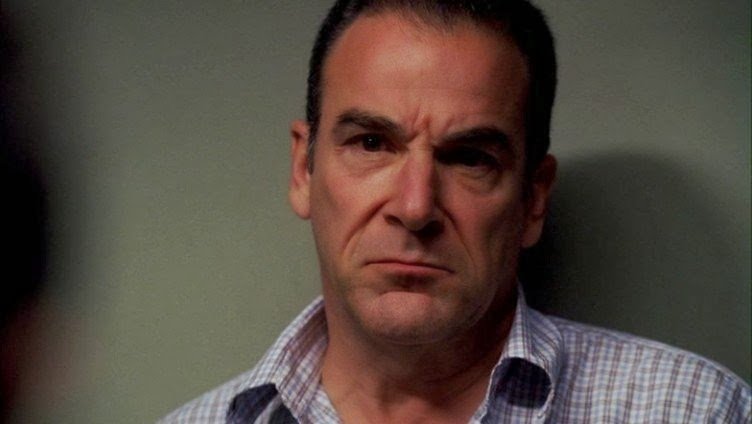
The departure of a central character can rattle a show to its core, but few exits have resonated as deeply and fundamentally altered a series' trajectory as Jason Gideon's departure and legacy did for Criminal Minds. When the brilliant, enigmatic profiler walked away, he left behind a void that no one could truly fill, shaping not only the BAU team but the very fabric of the show for its subsequent 13 seasons. His shadow loomed large, a testament to a character whose wisdom, trauma, and ultimate fate carved an indelible mark on television history.
At a Glance: Jason Gideon's Impact
- Who He Was: A founding member of the BAU, a senior supervisory special agent, and a legendary criminal profiler whose methods were both intuitive and academically rigorous.
- His Genius: Renowned for his ability to think like the unsub, often using unconventional psychological tactics to disarm and capture violent offenders.
- His Trauma: Suffered from severe PTSD and a nervous breakdown after a catastrophic case, foreshadowing his later emotional struggles.
- His Departure: Left abruptly in Season 3, citing emotional burnout and the devastating impact of his cases, particularly the Frank Breitkopf saga and the perceived responsibility for Hotch's suspension.
- Real-World Reason: Actor Mandy Patinkin found the show's dark content too "destructive to my soul."
- His Legacy: Continued to influence the team, especially Dr. Spencer Reid and David Rossi, through his teachings, his absence, and the lingering questions surrounding his exit.
- His Death: Murdered years later by an unsub from an unsolved case, bringing a tragic, full-circle closure to his story and sparking Rossi's quest for vengeance.
- Lasting Impact: Permanently shifted the team's dynamics and cemented the understanding that even the most brilliant minds are vulnerable to the darkness they pursue.
The Quiet Genius: Understanding Jason Gideon
Before his sudden exit, Jason Gideon wasn't just another agent; he was the bedrock of the Behavioral Analysis Unit. Born in 1955, Gideon was more than a profiler; he was an intellectual powerhouse, a protege of the legendary Max Ryan, and a man whose mind moved at a different speed than most. He developed pioneering methods in profiling, often relying on a deep, almost empathetic, understanding of the human psyche – both good and evil. He was the kind of man who could recite obscure historical facts one moment and then, with chilling accuracy, describe the inner workings of a serial killer's mind the next.
His personal life, though often sacrificed for his commitment to the job, provided glimpses into the man behind the badge. A divorced father to Stephen, his ex-wife Dr. Jill, a biological psychiatrist, even served as his therapist, highlighting the profound psychological toll his work took on him. This wasn't a man who just observed trauma; he absorbed it.
A Mind For Darkness: Gideon's Unforgettable Cases
Gideon's career was defined by an almost preternatural ability to delve into the minds of the most disturbed criminals. Yet, each dive took a piece of him, making his trajectory a poignant study of genius and psychological cost. To truly appreciate Learn about Jason Gideon's profound influence, one must look at the cases that shaped him and, ultimately, broke him.
The Architect of Psychological Disarmament
Gideon's methods were legendary, often relying on pure psychological warfare rather than brute force. In "Extreme Aggressor," he swiftly identified Timothy Vogel as "The Seattle Strangler," not just by evidence, but by understanding the unsubs core motivations. He'd disarm "The Footpath Killer" by strategically provoking a stutter, stripping away the killer's control and forcing a confession. Later, he convinced "The Tommy Killer," a phone technician, to surrender by promising him the fame he craved – a chilling insight into the criminal ego.
His work wasn't just about capture; it was about saving lives with his wits. In "What Fresh Hell?", he saved 11-year-old Billie Copeland by deducing her hiding spot in an attic. He secured a confession from Karl Arnold, "The Fox," by strategically mixing victim photos, exploiting the unsub's need for control. These moments weren't just about solving a case; they were about Gideon's unique ability to read the unwritten language of fear, desire, and madness.
Confronting His Demons: Adrian Bale and the Ghosts of the Past
Long before his final departure, Gideon carried immense trauma. A warehouse bombing, orchestrated by Adrian Bale, resulted in the deaths of six agents and a hostage. This catastrophic event triggered a nervous breakdown and severe PTSD, forcing Gideon into a six-month medical leave. It was a crucible that tested his resolve and left him with scars that never truly healed.
Years later, confronting Bale again in "Won't Get Fooled Again," Gideon used a brilliant bluff to save agents from another bomb, demonstrating both his enduring expertise and the lingering psychological toll. This case wasn't just a win; it was a constant reminder of the profound cost of his calling.
Moral Mazes and Impossible Choices: "Riding the Lightning"
Perhaps one of Gideon's most ethically complex cases was in "Riding the Lightning." Here, he allowed Sarah Jean Mason to be executed for a crime he knew she didn't commit, all to protect her son, Riley, whom he discovered was alive and adopted. It was an agonizing decision, a utilitarian calculation that saved an innocent child at the cost of his mother's life, and a stark illustration of the moral compromises Gideon often faced in the line of duty. These kinds of cases chipped away at his soul, forcing him to confront the darkest aspects of justice and survival.
The Ultimate Nemesis: Frank Breitkopf
While Gideon faced many monsters, none left such a deep wound as Frank Breitkopf. Described by Gideon himself as his "scariest and most evil serial killer," Frank was a chillingly intelligent, highly organized, and deeply disturbed individual with extensive medical knowledge, having killed for 30 years.
The two-part episode "No Way Out" and "No Way Out II" chronicles their twisted dance. Frank murdered Gideon's friend, Sarah Jacobs, and then systematically hunted other past victims, forcing Gideon into a desperate chase. The confrontation with Frank, and his partner Jane Hanratty, was a profound psychological battle that pushed Gideon to the brink. When Frank and Jane committed suicide, it was a hollow victory, leaving Gideon more traumatized than ever before. This case was the final, devastating blow to his already fragile psyche, setting the stage for his abrupt exit.
The Breaking Point: Why Gideon Left the BAU
The culmination of these harrowing experiences, particularly the Breitkopf case, proved too much for Jason Gideon. His official departure at the beginning of Season Three was abrupt and emotionally charged. In the show's narrative, he cited emotional exhaustion and a sense of responsibility for Unit Chief Hotchner's suspension, feeling the weight of Frank's actions and the constant exposure to unfathomable evil. He left his gun, badge, and a poignant letter for Reid, his protégé, and simply drove off, seeking solace in a solitary existence.
However, the real-world reason behind actor Mandy Patinkin's exit sheds an even more critical light on the show's intense content. Patinkin famously stated that his departure was due to the show's dark and violent nature, which he found "destructive to my soul and my personality." This revelation underscored the profound psychological impact not just on the fictional characters, but on the very people bringing these stories to life. It was a powerful statement about the human cost of constantly immersing oneself in the darkest corners of human behavior.
The Unseen Aftermath: Gideon's Lingering Presence
Gideon's departure left an undeniable void. For Dr. Spencer Reid, it was a particularly painful blow. Gideon had been a mentor, a father figure, and the person who saw beyond Reid's genius to the vulnerable young man underneath. His letter to Reid symbolized this bond, a final piece of guidance from the man who had taught him so much. Reid’s search for Gideon in the immediate aftermath highlighted the team’s grief and confusion.
David Rossi, Gideon's former partner and best friend, eventually took his place at the BAU. Rossi's arrival wasn't just a replacement; it was a continuation, a bridge to Gideon's past, bringing a different, yet equally seasoned, perspective. Rossi carried the torch, often referring to Gideon and his methods, ensuring that his legacy remained a tangible part of the team's operations. The team frequently mentioned Gideon after his departure, a constant reminder of the foundational role he played and the wisdom he imparted. Even in absence, Gideon shaped their decisions and approaches.
A Tragic Return: Gideon's Final Chapter and Death
Years after his departure, Jason Gideon's story found a tragic, violent conclusion. In the Season Ten episode "Nelson's Sparrow," audiences learned of his brutal murder on January 28, 2015. He was killed by Donnie Mallick, an unsub from an unsolved 1978 case that Gideon had been actively investigating, even in retirement. Mallick ambushed Gideon, ending the life of the brilliant profiler in a sudden, shocking act.
This event shook the BAU team to its core, reigniting their grief and galvanizing David Rossi into action. Rossi, haunted by the loss of his best friend, took on the case, eventually avenging Gideon by killing Mallick. It was a visceral, emotional storyline that brought closure to Gideon's narrative arc, reminding viewers of the ever-present danger that followed even retired profilers. His grave was later seen in "And in the End...", a final, somber acknowledgment of his passing.
His Enduring Legacy on Criminal Minds
Jason Gideon’s departure didn’t weaken Criminal Minds; in many ways, it strengthened its core themes and deepened its character development. His absence became a constant benchmark, a reminder of the psychological toll of the job.
- The Vulnerability of Profilers: Gideon’s breakdown normalized the idea that even the most brilliant minds are not immune to the horrors they witness. It highlighted the human cost of fighting evil, a theme that continued throughout the series.
- Mentor's Shadow: His influence on Reid, in particular, was profound and lasting. Reid often recalled Gideon's lessons and moral dilemmas, demonstrating how a great teacher continues to shape his students long after their direct interaction ends.
- The Weight of the Past: Gideon’s unsolved cases, including the one that led to his death, underscored the idea that a profiler's work is never truly finished and that the past can always catch up to you.
- Foundational Principles: Many of the BAU's core principles and profiling techniques were either established or perfected by Gideon. His methodologies continued to be taught and referenced, making him a timeless figure in the team's history.
- Emotional Depth: His journey, from genius to broken man, added immense emotional depth to the show, allowing for more complex explorations of trauma, redemption, and the relentless pursuit of justice.
Gideon wasn't just a character; he was a philosophical anchor for Criminal Minds, embodying the very questions the show sought to answer: What does it cost to stare into the abyss, and how do you find your way back?
Addressing Common Questions About Gideon
Why did Jason Gideon leave Criminal Minds?
In the show's narrative, Gideon left due to the immense emotional toll of his work, particularly after the traumatic Frank Breitkopf case and feeling responsible for Hotchner's suspension. He simply drove off, leaving his badge, gun, and a letter for Reid. In reality, actor Mandy Patinkin stated he left because the show's dark and violent content was "destructive to my soul and my personality."
Was Jason Gideon ever replaced on the BAU?
His position was eventually filled by David Rossi, his former partner and best friend. Rossi brought his own unique style and history to the team, but Gideon's influence remained a powerful undercurrent.
What was Gideon's most significant case?
While many cases challenged Gideon, his encounters with serial killer Frank Breitkopf were arguably his most significant. Frank was the only unsub Gideon described as truly "evil," and the case pushed him to his psychological breaking point, directly leading to his departure.
How did Gideon's departure impact Dr. Spencer Reid?
Gideon was a crucial mentor and father figure to Reid. His departure deeply affected Reid, who felt a profound sense of loss. Gideon's teachings and advice continued to influence Reid throughout his career, often serving as a moral compass or a source of strength.
Who killed Jason Gideon?
Jason Gideon was murdered by Donnie Mallick, an unsub from an unsolved 1978 case that Gideon had been personally investigating in his retirement. Mallick ambushed and killed him in his cabin.
The Echoes of a Profound Mind
Jason Gideon’s tenure on Criminal Minds might have been shorter than many fans wished, but his impact was anything but fleeting. He was the wise old soul, the brilliant strategist, and the deeply scarred veteran who reminded everyone that fighting monsters comes at a profound personal price. His departure was a seismic event, and his eventual death a heartbreaking punctuation mark, yet his legacy endures. Every time the BAU delves into the darkness, a piece of Gideon’s wisdom, his trauma, and his unwavering dedication echoes in their pursuit of justice. He proved that even in absence, a truly great character can continue to shape the narrative, making his mark on viewers and the fictional world he inhabited forever.