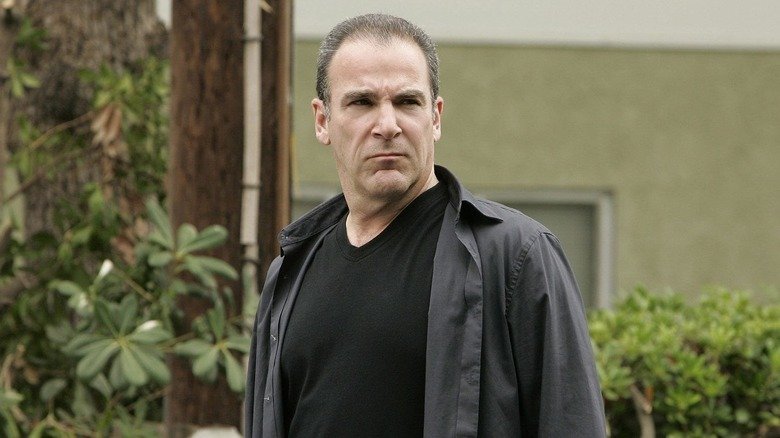
In the high-stakes world of criminal profiling, where the line between sanity and madness often blurs, few figures have cast as long and intricate a shadow as Jason Gideon. As the original Senior Supervisory Special Agent and unit chief of the FBI's Behavioral Analysis Unit (BAU) on Criminal Minds, Gideon wasn't just a character; he was the very bedrock upon which the series’ chilling premise was built. His enigmatic presence, profound intellect, and deeply scarred psyche defined the early seasons, setting a standard for the nuanced, empathetic yet intensely focused approach to hunting down the most dangerous offenders. This comprehensive Jason Gideon Character Profile & Biography dives deep into the mind of the man who taught us how to truly understand the "unsub"—and in doing so, illuminated the heavy toll such understanding can take.
At a Glance: Jason Gideon, The Original BAU Leader
- Role: Senior Supervisory Special Agent, Unit Chief of the FBI's Behavioral Analysis Unit (BAU).
- Portrayed By: Mandy Patinkin (main), Ben Savage (younger Gideon in flashbacks).
- First Appearance: "Extreme Aggressor" (Season 1, Episode 1).
- Last Appearance (on-screen): "In Name and Blood" (Season 3, Episode 2).
- Expertise: Forensic psychology, criminal profiling, behavioral analysis, exceptional deduction.
- Defining Traits: Brilliant, empathetic, intense, unconventional, emotionally burdened, a gifted chess player.
- Key Relationships: Mentor to Spencer Reid; estranged wife Chloe and son Stephen; long-time partner David Rossi; girlfriend Sarah Jacobs.
- Tragic Departure: Left the BAU due to emotional distress, loss of confidence after Sarah's murder and other critical incidents.
- Ultimate Fate: Murdered off-screen by Donnie Mallick in Season 10's "Nelson's Sparrow."
- Real-life Inspiration: Partially based on real-life criminal profiler John E. Douglas.
The Architect of Profiling: An Unparalleled Mind
From his very first scene, Gideon commanded attention. Mandy Patinkin brought a gravitas and quiet intensity to the role that immediately established Gideon as the quintessential profiler—a man who didn't just study criminals, but seemed to peer directly into their fractured souls. His intelligence was exceptional, his analytical skills razor-sharp, allowing him to uncover patterns and motives that eluded others. He possessed a heightened sense of awareness, a near-psychic ability to anticipate an offender's next move, often by thinking several steps ahead, much like a master chess player. It’s no wonder he consistently outmaneuvered Agent Spencer Reid, despite Reid’s genius-level IQ.
Gideon wasn't content with conventional approaches. He often bent rules, pushed boundaries, and challenged assumptions to get to the truth, always driven by an unwavering dedication to victims. This wasn't a cold, academic pursuit; his methods were deeply rooted in a profound sense of empathy and compassion. He understood the monsters, yes, but he never lost sight of the humanity they destroyed. This duality—the brilliant intellect coupled with a deep emotional wellspring—made him incredibly effective, yet also profoundly vulnerable.
A Mind Forged in Fire: Gideon's Tragic Past and Personal Demons
While Gideon's brilliance was undeniable, it was his inner turmoil that truly gave him depth. His past was not just a backstory; it was a living, breathing weight he carried with him, shaping every decision and haunting his every success.
The Adrian Bale Catastrophe
Perhaps the most significant scar on Gideon's psyche was the Adrian Bale incident. Years before the series began, Gideon made a call that resulted in a warehouse explosion, killing six agents and a hostage. This catastrophic event led to a six-month medical leave and planted a seed of guilt and self-doubt that would fester throughout his career. When Bale, "The Boston Shrapnel Bomber," resurfaced, Gideon was forced to confront this devastating past directly in "Won't Get Fooled Again." It was a brutal reminder of the consequences of his high-stakes profession, and a burden he constantly wrestled with.
A Troubled Personal Life
Gideon's personal life mirrored the intensity and pain of his professional one. His estranged wife, Chloe, was a victim of domestic violence, an experience that fueled his own guilt and self-loathing. He also had a son, Stephen, from whom he was estranged, adding another layer of personal regret. These relationships, often glimpsed through brief mentions or flashbacks, painted a picture of a man whose dedication to saving others often came at the expense of his own happiness and family connections.
He wrestled with anxiety and depression, manifesting sometimes in fits of rage—a stark contrast to his often-calm exterior. The job was not just a career; it was an all-consuming force that chipped away at his spirit, leaving him vulnerable to the darkness he constantly fought. This emotional burden was palpable and made him one of the most relatable, if tragic, figures on the team.
The Weight of Every Victim
Gideon carried the weight of every victim, and every agent under his command. He blamed himself for Agent Spencer Reid's horrific torture by Tobias Hankel and the shooting of Agent Elle Greenaway. This profound sense of responsibility, while noble, was also ultimately unsustainable. It highlighted a critical theme of Criminal Minds: the emotional toll of constantly confronting pure evil.
Signature Cases and Unforgettable Showdowns
Gideon's tenure was marked by some of the most memorable and intense cases in Criminal Minds history, each showcasing his unique approach to profiling.
The Footpath Killer and Early Triumphs
In the series pilot, "Extreme Aggressor," Gideon's reintroduction to the BAU after his medical leave immediately put his skills to the test against a serial killer targeting young men in Seattle. Simultaneously, while on vacation, he apprehended the notorious Footpath Killer. These early cases solidified his reputation as a master profiler who could get inside the minds of the most disturbed individuals.
The Return of Adrian Bale
His confrontation with Adrian Bale wasn't just a case; it was a personal reckoning. Facing the man responsible for the deaths of his team members, Gideon had to overcome his trauma to save others. This storyline was critical in showing the audience the deep personal stakes involved in the BAU's work.
The Haunting of Frank Breitkopf
Perhaps Gideon's most devastating personal case involved serial killer Frank Breitkopf, a nihilistic, charming murderer who targeted people Gideon had previously rescued. The ultimate tragedy struck when Breitkopf murdered Gideon's new girlfriend, Sarah Jacobs. This deeply personal attack pushed Gideon to his emotional brink, culminating in a harrowing confrontation where Breitkopf and his accomplice, Jane Hanratty, committed suicide. This event was a major turning point, shattering Gideon's already fragile emotional state. He was seeking a "belief in happy endings," and Frank Breitkopf cruelly stole that hope.
Relationships that Shaped a Legend
Gideon's interactions with his team members were central to his character development and the early dynamics of the BAU.
Mentor to a Genius: Gideon and Reid
The relationship between Gideon and Spencer Reid was one of the most compelling aspects of the early seasons. Gideon saw beyond Reid's social awkwardness and recognized his extraordinary intellect, becoming a vital mentor figure. He taught Reid not just the mechanics of profiling, but also the crucial human element, guiding him through difficult cases and helping him develop into a more confident agent. Their chess matches were a recurring motif, symbolizing Gideon's strategic mind and his gentle but firm guidance of Reid. He left Reid a goodbye letter, a final act of mentorship, underscoring the deep bond they shared.
The Enduring Partnership: Gideon and Rossi
While David Rossi joined the series after Gideon's departure, flashbacks and later dialogue revealed their long-standing partnership early in their FBI careers. They were proteges of Max Ryan and shared a deep history, a mutual respect, and an understanding of the immense pressures of their work. Rossi, stepping into Gideon’s role, often spoke of him with reverence and regret, acknowledging the profound impact Gideon had on the unit and on him personally.
The Weight of the Job: Why Gideon Left the BAU
Jason Gideon's departure was one of the most shocking and impactful moments in Criminal Minds history. It wasn't just a character leaving; it was a testament to the brutal reality of the show's subject matter. The reasons for his exit were complex, both within the narrative and behind the scenes.
In the narrative, the murder of his girlfriend, Sarah Jacobs, by Frank Breitkopf was a crushing blow. It followed on the heels of another case in Arizona, where a critical decision he made resulted in two more deaths. These cumulative traumas led to a profound loss of confidence in his profiling skills. He felt he could no longer effectively do the job, that the darkness had finally consumed too much of him. In "In Name and Blood" (Season 3, Episode 2), he made the agonizing decision to leave the BAU. He left his gun, badge, and a poignant goodbye letter for Reid, and was last seen driving off, explicitly seeking "the belief in happy endings"—a stark acknowledgment of what he had lost in the pursuit of justice.
The real-world reason for Mandy Patinkin's abrupt departure in 2007 was equally significant. Patinkin publicly stated that the show "was very destructive to my soul and my personality." The constant immersion in violent crime and human depravity took an unbearable emotional toll on him, mirroring the very struggles Gideon faced. This convergence of character and actor's experience lent an undeniable authenticity to Gideon's exit, making it all the more impactful.
An Unseen End: Gideon's Final Chapter
Years after his departure, Jason Gideon's story found its tragic conclusion off-screen. In Season 10's "Nelson's Sparrow," the BAU team is called to investigate his murder. Gideon was shot dead at close range in his cabin by Donnie Mallick, a serial killer he and Rossi had investigated over 30 years prior. The episode served as a powerful tribute to Gideon, allowing the team and the audience to mourn his loss and reflect on his immense contributions.
His death was a poignant reminder that even the most brilliant and empathetic among them were never truly safe, and that the shadows of their past cases could always return. It also allowed Rossi to grapple with the loss of his old friend, further cementing Gideon's indelible mark on the series. Following his departure, the unit chief position saw various capable agents step up, with Aaron Hotchner, Emily Prentiss, and temporarily Jennifer Jareau leading, while Rossi ultimately replaced him as Senior Supervisory Special Agent.
Gideon's Enduring Legacy
Despite his relatively short run on Criminal Minds, Jason Gideon's impact on the show and its characters is immeasurable. He was the philosophical heart of the BAU, teaching the team—and by extension, the audience—the profound importance of understanding the "why" behind the crime, not just the "how."
His influence on Spencer Reid is perhaps his most visible legacy. Reid’s development into a more emotionally intelligent and confident agent can be directly attributed to Gideon’s mentorship. Gideon instilled in him a deep respect for the human element of profiling, something beyond mere facts and statistics. Even after his death, Gideon's lessons and his memory continued to guide the team, serving as a moral compass and a reminder of the emotional cost of their work.
He demonstrated that true strength in profiling wasn't just about catching the unsub, but about grappling with the darkness without letting it consume you entirely—a battle Gideon fought valiantly until his very last moments as an agent. He represented the profound emotional burden of empathy in the face of unspeakable evil, a theme that remained central to Criminal Minds for its entire run. To dive deeper into the nuances of this pivotal character, you can learn more about Jason Gideon. His journey is a testament to the complexities of the human psyche, both criminal and heroic.
Understanding the Minds of Unsubs: Gideon's Profiling Philosophy
Gideon's approach to profiling was a masterclass in forensic psychology. He combined rigorous intellectual analysis with an almost spiritual understanding of human nature.
- Empathy as a Tool: Unlike some profilers who might maintain a clinical distance, Gideon used his empathy as a powerful tool. He tried to understand the offender's perspective, not to condone, but to predict. He often saw the damaged humanity within the monster, which made his work incredibly taxing.
- The Power of Observation: Gideon was a keen observer, picking up on minute details—a phrase, a gesture, an object left behind—that others missed. These seemingly insignificant clues would often unlock the entire profile.
- Psychological Nuance: He understood that criminals weren't monolithic; they were products of their environment, trauma, and choices. His profiles delved into the psychological motivations, the specific triggers, and the internal logic (however twisted) of the unsub. He was particularly adept at recognizing the interplay between past trauma and present-day aggression.
- Trusting Instincts (But Verifying): While highly analytical, Gideon also trusted his gut feelings, honed by years of experience. However, he never relied solely on instinct, always seeking to back up his theories with concrete evidence and psychological principles.
His disdain for the use of religion as a defense for crimes, as seen in cases like "In the Dark," highlighted his belief in personal accountability and the manipulation of belief systems for sinister purposes. Gideon consistently sought the truth behind the veneer, no matter how unsettling.
The Enduring Echo of a Profound Character
Jason Gideon was more than just a character on a crime procedural; he was an exploration of the psychological toll of fighting evil. His journey, marked by brilliance and heartbreak, offered a raw, honest look at what it truly means to delve into the darkest corners of the human mind. He taught us that understanding evil doesn't make you immune to its effects; in fact, it often makes you more vulnerable.
His legacy is not just in the cases he solved or the lives he saved, but in the indelible mark he left on his team and on the audience, reminding us that even the strongest minds can be broken by the shadows they chase. His story serves as a profound meditation on empathy, justice, and the relentless search for "a belief in happy endings," even when they seem perpetually out of reach.